EQ
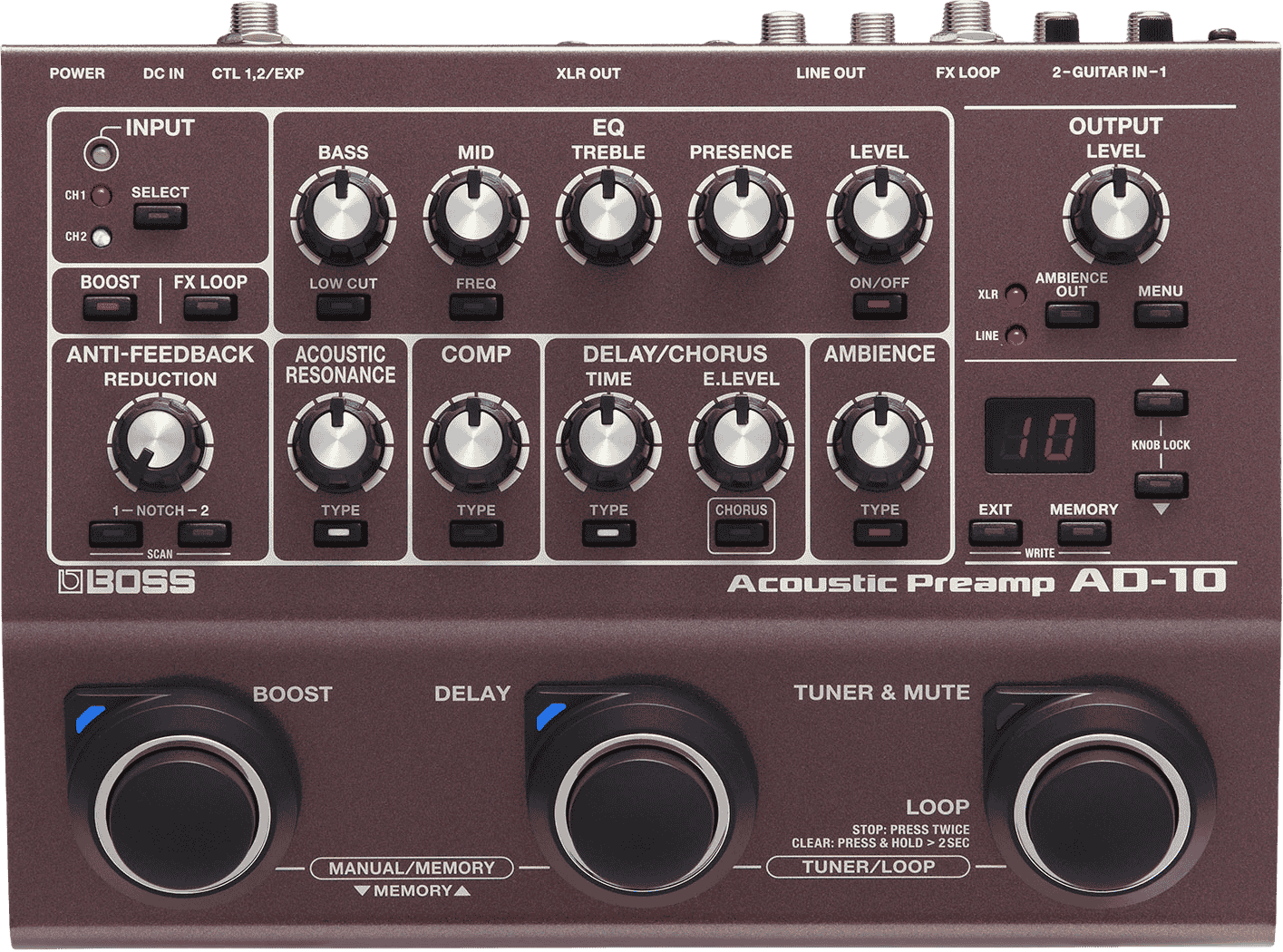
An EQ (equalizer) guitar effect allows players to shape tone by boosting or cutting specific frequency ranges within the signal. Rather than adding gain or modulation, EQ pedals focus on fine-tuning how a guitar sounds in a mix, making them one of the most powerful and practical tone-shaping tools available. By adjusting frequencies such as bass, mids, and treble, an EQ can dramatically change clarity, punch, and overall balance.
Most EQ pedals use either graphic sliders or parametric controls to target precise frequency bands. This makes EQ useful for solving common problems, such as tightening low end, reducing harsh highs, or emphasizing mids so a guitar cuts through a band mix. EQ can also be used creatively, acting as a clean boost, mid-push for solos, or tone sculptor before or after gain pedals to reshape distortion character.
EQ effects are used across all genres and skill levels because of their versatility and transparency. They are especially valuable in live settings, recording environments, and complex pedalboards where subtle adjustments can make a major difference. For guitarists looking to refine their tone, correct problem frequencies, or gain maximum control over their sound, an EQ pedal is one of the most effective tools in a signal chain.