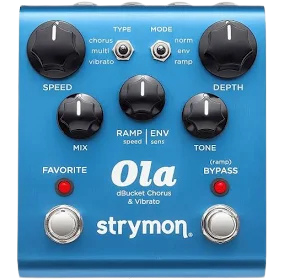
Vibrato
A vibrato guitar effect modulates pitch only, creating a smooth rising and falling variation in note frequency without changing volume. Unlike tremolo, which modulates amplitude, vibrato produces a liquid, wavering tone that can range from subtle movement to dramatic, seasick pitch bends. This effect was originally built into vintage amplifiers and tape machines, giving early electric guitar recordings their distinctive sense of motion and expressiveness.
Modern vibrato pedals typically offer controls for rate and depth, allowing players to dial in anything from gentle analog-style shimmer to bold, warbling modulation. At low settings, vibrato adds warmth and dimension to clean guitar tones. At higher depths and faster speeds, it creates lo-fi textures and psychedelic sounds that stand out in ambient, surf, indie, and experimental music. Some pedals also include waveform shaping or random modulation to emulate worn tape or unstable circuitry.
Vibrato is often used as a character effect rather than an always-on modulation, but it excels at adding personality to simple parts and sustained notes. It pairs especially well with reverb and delay, and can be placed before or after overdrive to emphasize either clarity or movement. For guitarists looking to introduce expressive pitch modulation, vintage flavor, or subtle instability into their tone, vibrato remains one of the most distinctive and musical modulation effects available.