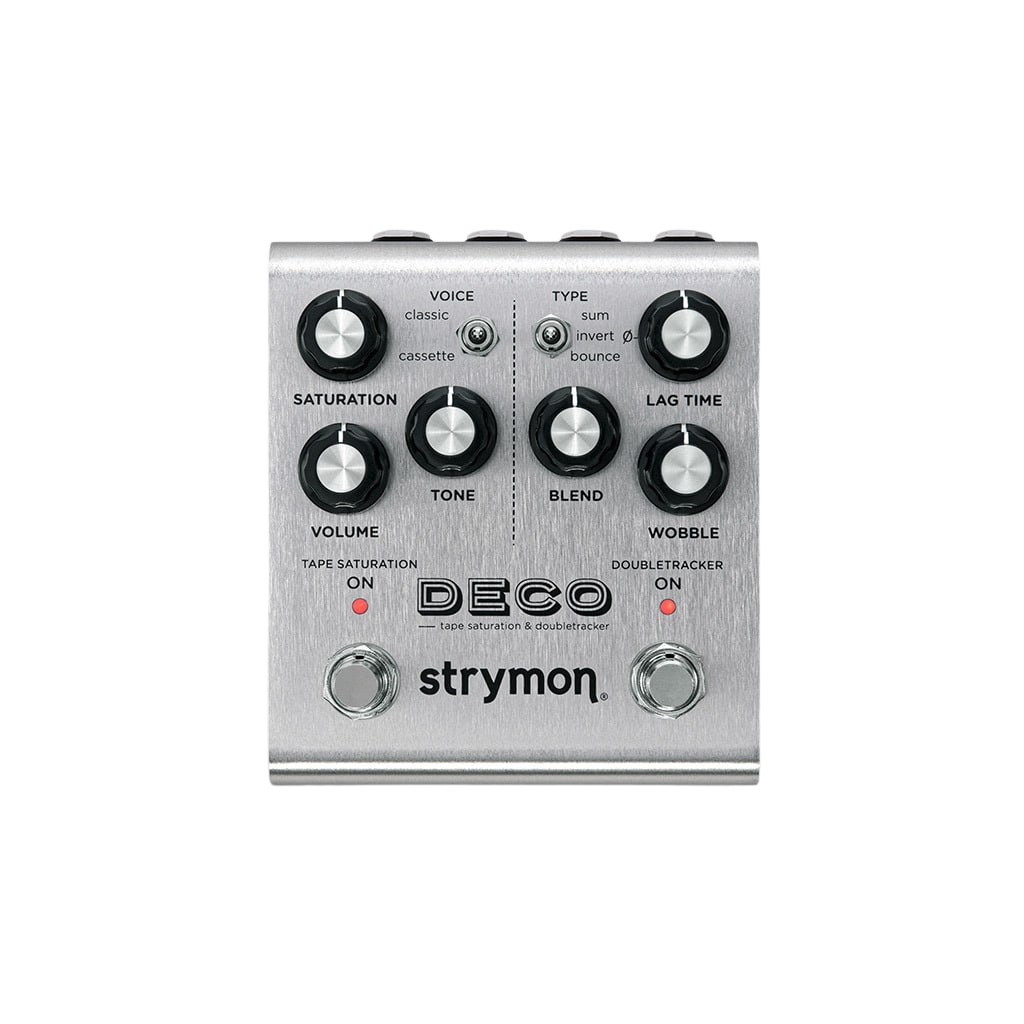
Tape Saturation
Tape saturation is a guitar effect that recreates the subtle compression, harmonic distortion, and warmth produced when analog tape machines are driven hard. Instead of aggressive clipping like a distortion or fuzz pedal, tape saturation adds soft, musical harmonics, gentle compression, and a slight rounding of transients. The result is a thicker, richer guitar tone that feels more alive and dynamic, especially when used on clean or edge-of-breakup sounds.
Guitarists use tape saturation to add character without changing the core identity of their tone. It can make clean parts sound fuller, push delays and reverbs into a more vintage space, or smooth out harsh frequencies in digital rigs. Many tape saturation effects also introduce subtle elements like wow and flutter, low-end enhancement, or high-frequency roll-off, all of which help emulate the behavior of real tape machines used in classic studio recordings.
Tape saturation guitar pedals are commonly used in blues, rock, indie, ambient, and lo-fi styles, but they work anywhere a natural, analog feel is desired. Unlike traditional overdrive pedals, tape saturation responds strongly to picking dynamics and guitar volume changes, making it a popular always-on effect. For players looking to add warmth, depth, and studio-style polish to their signal chain, tape saturation is one of the most musical and versatile tone-shaping effects available.