Pitch Shift
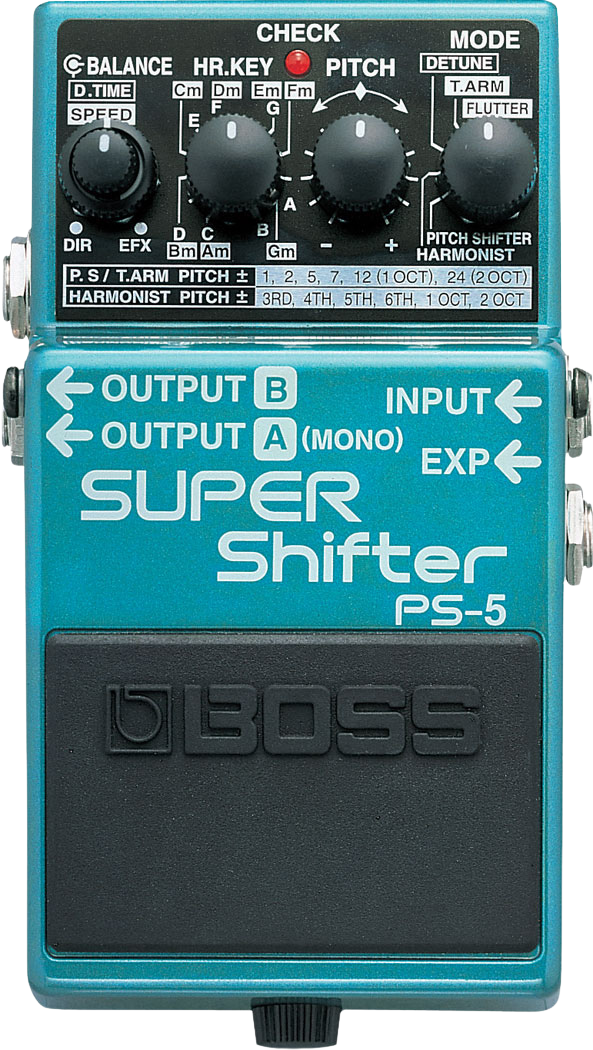
A pitch shift guitar effect changes the pitch of the incoming signal up or down by a fixed musical interval, allowing guitarists to create harmonies, octaves, or entirely new melodic lines from a single note. Unlike modulation effects that continuously vary pitch, pitch shifters apply precise, controlled shifts such as octaves, fifths, thirds, or custom intervals. This makes them useful for both subtle tone enhancement and dramatic sound design.
Most pitch shift pedals offer controls for interval selection, blend, and tracking behavior. Simple pitch shifters may add an octave up or down to thicken riffs or extend range, while more advanced units allow multiple voices, polyphonic tracking, and intelligent harmony that follows a selected key or scale. Modern digital pitch shifters have improved tracking and low latency, making them playable for chords as well as single-note lines.
Pitch shift effects are used across many genres, including rock, metal, ambient, pop, worship, and experimental music. They are commonly used to create harmonized leads, simulate bass lines, add shimmer-like textures, or build massive layered sounds. For guitarists looking to expand melodic possibilities and explore new sonic territory, pitch shifting is a versatile and powerful effect that goes far beyond traditional guitar tones.